


产品中心
- 细胞类
- 生化试剂
- ELISA检测
-
抗体蛋白
二抗生物素标记 过氧化物酶(HRP)标记 胶体金试剂 FITC荧光标记 RBITC荧光标记 二抗免疫血清 其它荧光标记二抗 藻红蛋白(PE)荧光标记 胶体金(Gold)标记 SAlexa Fluor荧光系列 碱性磷酸酶(AP)标记 别藻蓝蛋白(APC)荧光标记 其它标记 PE标记二抗 DyLight标记二抗 AU标记二抗 Biotin标记二抗 AMCA标记二抗 Texas Red标记二抗 TRITC标记二抗 HRP标记二抗 未标记二抗 Cy标记二抗 AbBox Fluor标记二抗内参抗体 小分子抗体抗体标记试剂盒细菌抗体蛋白病毒包装试剂杂交瘤融合筛选WB、IHC、ELISA相关试剂细胞培养试剂病原微生物抗原抗体假病毒抗体校准品其他抗原抗体标记的标签抗体病理级IHC抗体重组蛋白
- 细胞培养
- 实验耗材
- 仪器设备
- 生化试剂盒
- 小分子试剂
- 基质胶
-
斑马鱼产品
订货方式
订货电话:13564444959
订货时间:周一至周五
订货Q Q:79688691
订货邮件:79688691@qq.com
订货时间:周一至周五
订货Q Q:79688691
订货邮件:79688691@qq.com


产品简介
储存与保存
注意事项
 产品简介
-
货号IM59481
-
别名Fibroblast growth factor receptor 1 (FGFR-1) (EC 2.7.10.1) (Basic fibroblast growth factor receptor 1) (BFGFR) (bFGF-R-1) (Fms-like tyrosine kinase 2) (FLT-2) (N-sam) (Proto-oncogene c-Fgr) (CD antigen CD331);BFGFR;CEK;FGFBR;FLG;FLT2;HBGFR;
-
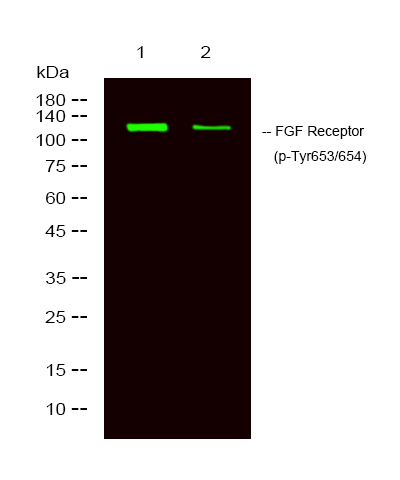
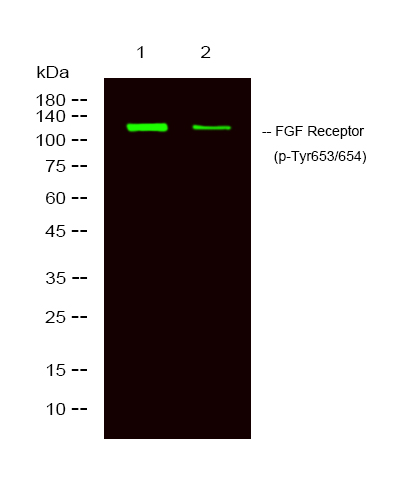
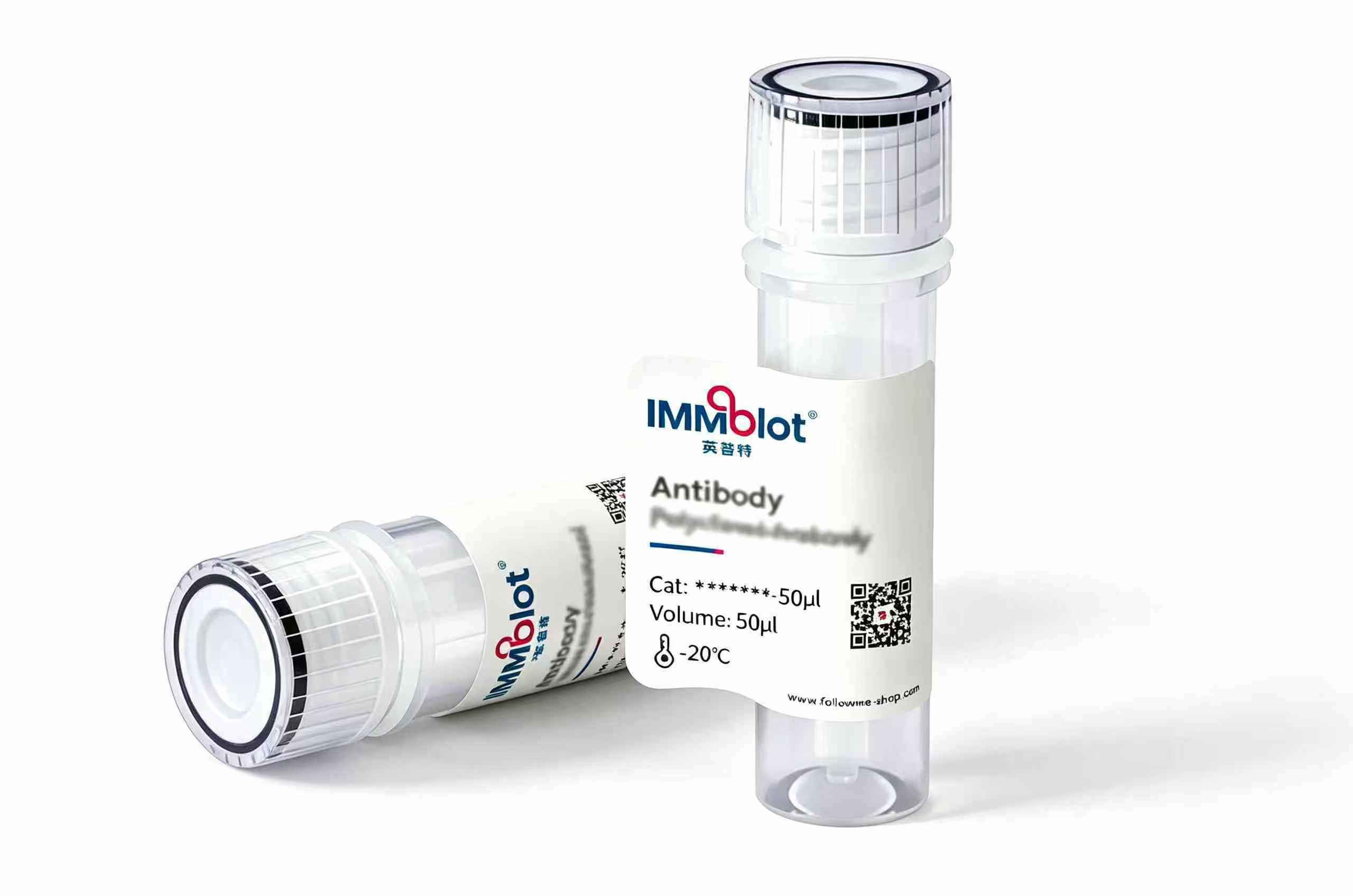
产品名称FGF Receptor (Phospho Tyr653/654) Rabbit Polyclonal Antibody
-
类别抗体产品
-
基因名称FGFR1
-
蛋白名称FGF Receptor (Tyr653/654)
-
ClonalityPolyclonal
-
推荐应用WB
-
反应种属Human,Rat,Mouse
-
浓度1 mg/ml
-
存储缓冲液Liquid in PBS containing 50% glycerol, 0.5% BSA and 0.02% New type preservative N.
-
Human Gene ID2260
-
Human Swissprot No.P11362
-
Mouse Gene ID14182
-
Mouse Swissprot No.P16092
-
Rat Gene ID79114
-
Rat Swissprot No.Q04589
-
免疫原Synthesized phosho peptide around human FGF Receptor (Tyr653 and 654)
-
特异性This antibody detects endogenous levels of Human FGF Receptor (phospho-Tyr653 or 654)
-
稀释度WB 1:1000-2000
-
参考分子量120kDa
-
预测分子量full length 120-140kDa,FOP-FGFR1 90kDa
-
宿主Rabbit
-
同种型Rabbit,IgG
-
背景介绍The protein encoded by this gene is a member of the fibroblast growth factor receptor (FGFR) family, where amino acid sequence is highly conserved between members and throughout evolution. FGFR family members differ from one another in their ligand affinities and tissue distribution. A full-length representative protein consists of an extracellular region, composed of three immunoglobulin-like domains, a single hydrophobic membrane-spanning segment and a cytoplasmic tyrosine kinase domain. The extracellular portion of the protein interacts with fibroblast growth factors, setting in motion a cascade of downstream signals, ultimately influencing mitogenesis and differentiation. This particular family member binds both acidic and basic fibroblast growth factors and is involved in limb induction. Mutations in this gene have been associated with Pfeiffer syndrome, Jackson-Weiss syndrome,
-
组织表达Detected in astrocytoma, neuroblastoma and adrenal cortex cell lines. Some isoforms are detected in foreskin fibroblast cell lines, however isoform 17, isoform 18 and isoform 19 are not detected in these cells.
-
细胞定位Cell membrane; Single-pass type I membrane protein. Nucleus. Cytoplasm, cytosol. Cytoplasmic vesicle. After ligand binding, both receptor and ligand are rapidly internalized. Can translocate to the nucleus after internalization, or by translocation from the endoplasmic reticulum or Golgi apparatus to the cytosol, and from there to the nucleus.
-
信号通路MAPK_ERK_Growth;MAPK_G_Protein;Adherens_Junction;Regulates Actin and Cytoskeleton;Pathways in cancer;Prostate cancer;Melanoma;
-
功能catalytic activity:ATP + a [protein]-L-tyrosine = ADP + a [protein]-L-tyrosine phosphate.,disease:A chromosomal aberration involving FGFR1 may be a cause of stem cell leukemia lymphoma syndrome (SCLL). Translocation t(8;13)(p11;q12) with ZMYM2. SCLL usually presents as lymphoblastic lymphoma in association with a myeloproliferative disorder, often accompanied by pronounced peripheral eosinophilia and/or prominent eosinophilic infiltrates in the affected bone marrow.,disease:A chromosomal aberration involving FGFR1 may be a cause of stem cell myeloproliferative disorder (MPD). Translocation t(6;8)(q27;p11) with FGFR1OP. Insertion ins(12;8)(p11;p11p22) with FGFR1OP2. MPD is characterized by myeloid hyperplasia, eosinophilia and T-cell or B-cell lymphoblastic lymphoma. In general it progresses to acute myeloid leukemia. The fusion proteins FGFR1OP2-FGFR1, FGFR1OP-FGFR1 or FGFR1-FGFR1OP may exhibit constitutive kinase activity and be responsible for the transforming activity.,disease:A chromosomal aberration involving FGFR1 may be a cause of stem cell myeloproliferative disorder (MPD). Translocation t(8;9)(p12;q33) with CEP110. MPD is characterized by myeloid hyperplasia, eosinophilia and T-cell or B-cell lymphoblastic lymphoma. In general it progresses to acute myeloid leukemia. The fusion protein CEP110-FGFR1 is found in the cytoplasm, exhibits constitutive kinase activity and may be responsible for the transforming activity.,disease:Defects in FGFR1 are a cause of idiopathic hypogonadotropic hypogonadism (IHH) [MIM:146110]. IHH is defined as a deficiency of the pituitary secretion of follicle-stimulating hormone and luteinizing hormone, which results in the impairment of pubertal maturation and of reproductive function.,disease:Defects in FGFR1 are a cause of Pfeiffer syndrome (PS) [MIM:101600]; also known as acrocephalosyndactyly type V (ACS5). PS is characterized by craniosynostosis (premature fusion of the skull sutures) with deviation and enlargement of the thumbs and great toes, brachymesophalangy, with phalangeal ankylosis and a varying degree of soft tissue syndactyly.,disease:Defects in FGFR1 are the cause of Kallmann syndrome type 2 (KAL2) [MIM:147950]; also known as hypogonadotropic hypogonadism and anosmia. Anosmia or hyposmia is related to the absence or hypoplasia of the olfactory bulbs and tracts. Hypogonadism is due to deficiency in gonadotropin-releasing hormone and probably results from a failure of embryonic migration of gonadotropin-releasing hormone-synthesizing neurons. In some cases, midline cranial anomalies (cleft lip/palate and imperfect fusion) are present and anosmia may be absent or inconspicuous.,disease:Defects in FGFR1 are the cause of non-syndromic trigonocephaly [MIM:190440]; also known as metopic craniosynostosis. The term trigonocephaly describes the typical keel-shaped deformation of the forehead resulting from premature fusion of the frontal suture. Trigonocephaly may occur also as a part of a syndrome.,disease:Defects in FGFR1 are the cause of osteoglophonic dysplasia (OGD) [MIM:166250]; also known as osteoglophonic dwarfism. OGD is characterized by craniosynostosis, prominent supraorbital ridge, and depressed nasal bridge, as well as by rhizomelic dwarfism and nonossifying bone lesions. Inheritance is autosomal dominant.,function:Receptor for basic fibroblast growth factor. A shorter form of the receptor could be a receptor for FGF1 (aFGF).,PTM:Binding of FGF1 and heparin promotes autophosphorylation on tyrosine residues and activation of the receptor.,similarity:Belongs to the protein kinase superfamily. Tyr protein kinase family.,similarity:Belongs to the protein kinase superfamily. Tyr protein kinase family. Fibroblast growth factor receptor subfamily.,similarity:Contains 1 protein kinase domain.,similarity:Contains 3 Ig-like C2-type (immunoglobulin-like) domains.,subunit:Interacts with SHB. Interacts with KLB.,
-
纯化The antibody was affinity-purified from rabbit serum by affinity-chromatography using specific immunogen.
储存与保存1.保存:-20℃
2.有效期:1年
注意事项1.我司生产的生化试剂如无特殊标注,基本为非无菌包装,若用于细胞实验,请提前做好预处理。需低温保存的产品,一旦配成溶液,请分装保存,避免反复冻融造成的产品失效。
2.本产品仅供科研使用。请勿用于医药、临床诊断或治疗,食品及化妆品等用途。请勿存放于普通住宅区。
3.为了您的安全和健康,请穿好实验服并佩戴一次性手套和口罩操作。
4.实验结果可由多种因素影响,相关处理只限于产品本身,不涉及其他赔偿。
备注:由于产品信息可能会有优化升级,请以实际收货标签信息为准。
产品推荐
-
 β-Tubulin Mouse Monoclonal Antibody,HRP Conjugated¥2200.00货号:IM70308
-
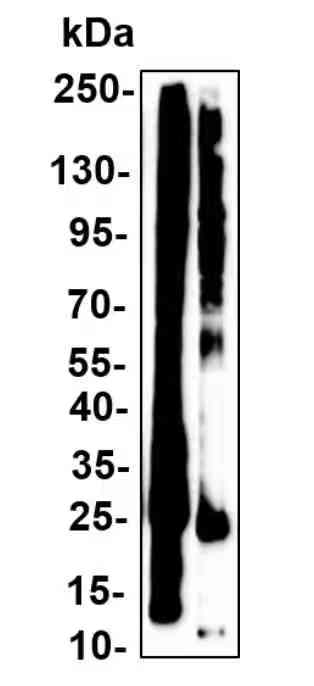 L-Lactyl Lysine (17E10) Rabbit Monoclonal Antibody¥1600.00货号:IM39531
-
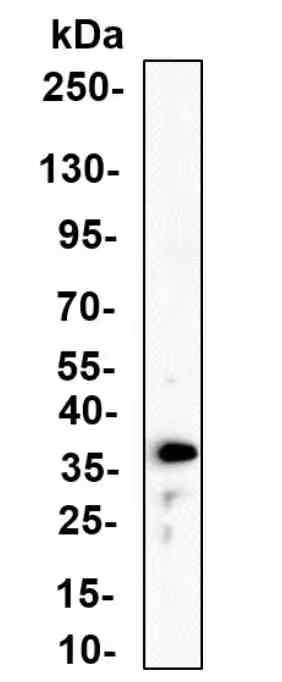 Annexin II (5W1) Rabbit Monoclonal Antibody¥1600.00货号:IM35141
-
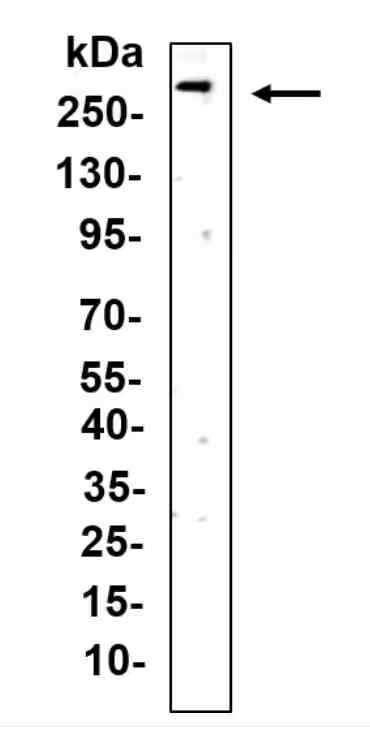 p300 (12P7) Rabbit Monoclonal Antibody¥1600.00货号:IM35111
-
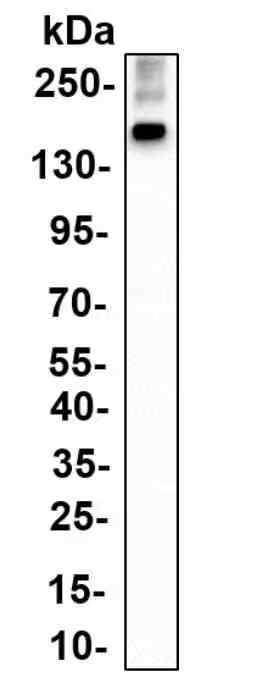 EHMT2 (1R17) Rabbit Monoclonal Antibody¥1600.00货号:IM35217